


Zippo
The history of the Zippo company
The history of Zippo Manufacturing Company is the history of its people. This includes not only the founder, George G. Blaisdell, but also the many Zippo employees, customers and collectors who have played an important role in the company's rich history. Their loyalty and dedication have made Zippo one of America's greatest and best-known icons today.
20 Items
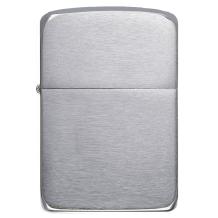
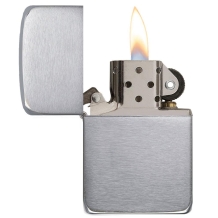
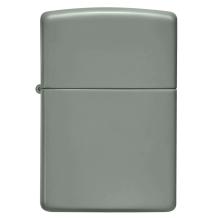
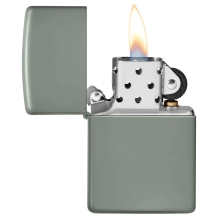
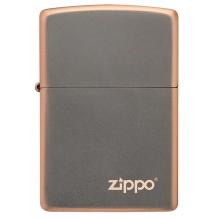
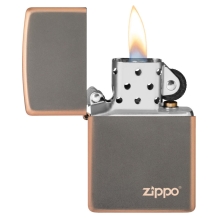
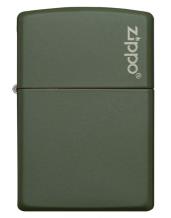
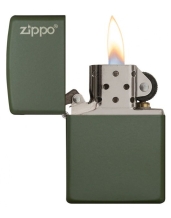
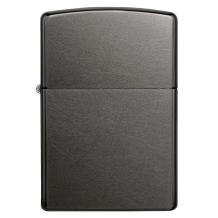
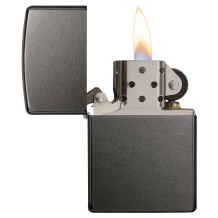
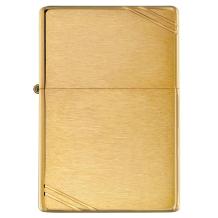
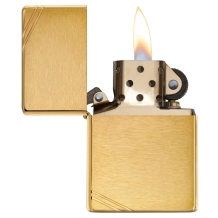
1930s
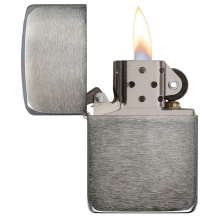
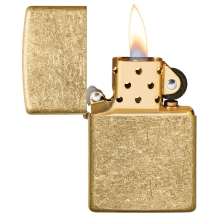
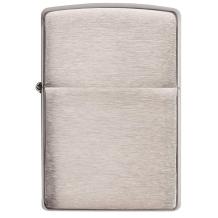
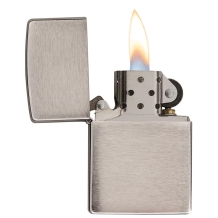
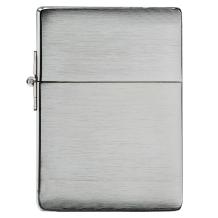
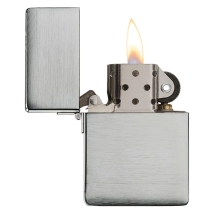
The Zippo story begins in the early 1930s in Bradford, Pennsylvania. George G. Blaisdell watched as his friend struggled to use an unwieldy Austrian lighter. He noted that because of its unique fireplace, the lighter worked well in the wind, but its shape and design made it difficult to use. The lighter required two hands to operate, and the thin metal surface dented easily.
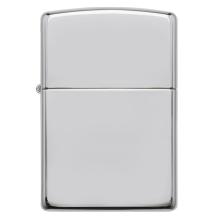
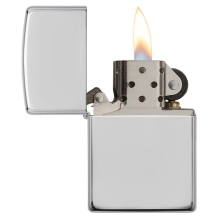
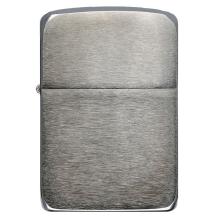
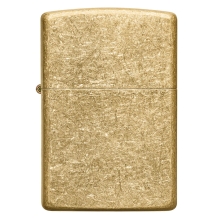
In late 1932, Blaisdell decided to reconstruct an Austrian lighter. He made a small rectangular box and attached a lid with a hinge. It retained the structure with a fireplace that protected the flame. A lighter that was easy to operate resulted. The name "Zippo" was coined by Blaisdell. He liked the sound of the word "Zipper," so he made variations on the word until he settled on "Zippo," a name he thought sounded "modern."
A new pocket lighter cost $1.95 at the time. George G. Blaisdell also introduced his famous unconditional lifetime warranty: "It works or we'll fix it for free.™" Zippo's original patent application was filed on May 17, 1934, and patent number 2,032,695 was granted on March 3, 1936. The first Zippo pocket lighter, produced in 1933, is on display at the Zippo/Case Museum in Bradford.
In the mid-1930s, the Kendall Refining Company in Bradford placed an order for 500 Zippo lighters. It is believed that these were the first lighters produced by Zippo. Today, of course, the old Zippo lighters are highly prized collectibles for Zippo collectors.
1940s
World War II had a profound effect on the Zippo brand. After the US entered the war in 1941, Zippo stopped producing lighters for the consumer market and allocated the entire volume to the US military. This initiative led to the Zippo lighter with a steel case and a black crackle finish. The fact that millions of American soldiers carried a lighter with them during battles was a major factor in Zippo becoming a global brand and an American symbol. Supplying the military market resulted in the full production of the factory, allowing Zippo to become a financially strong and profitable company.
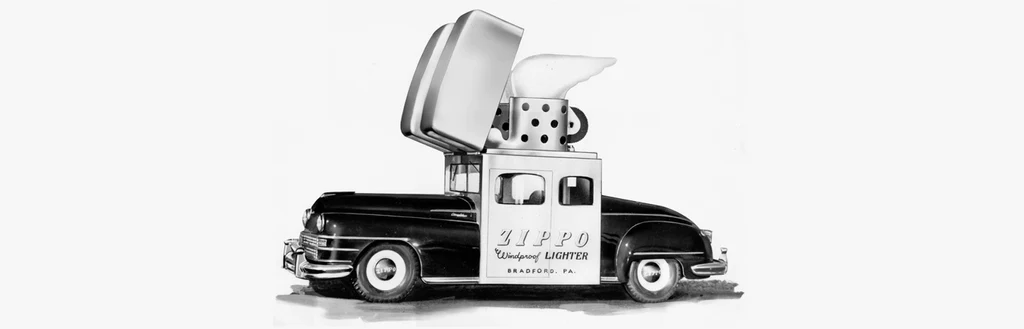
At the end of the war, in 1945, Zippo resumed production of lighters for the American consumer market. George G. Blaisdell dreamed of taking to the streets in a car that looked like a Zippo lighter, and in 1947 the Zippo car was born.
The 1950s
In August 1950, the Zippo factory received a second patent number 2517191. The design of the Zippo lighter has remained largely the same to this day, with only minor improvements.
Since the mid-1950s, a date code has been stamped on the bottom of each Zippo lighter . The original purpose was quality control, but the codes have since become an invaluable tool for collectors.
In 1956, Zippo introduced the Slim lighter , which was an important milestone in its history. This slightly smaller version of the Zippo lighter was designed with women in mind, but to the surprise of its makers, it also appealed to men.
1960s
Beginning in the 1960s, Zippo lighters were used to greet their favorite artists at concerts, later called the "Zippo moment."
In 1962, Zippo produced its first product that was not a lighter. It was a steel tape measure called "Rule," whose design resembled the famous lighter. Since the 1960s, several items have been added to or removed from the Zippo product line. Many of them were promotional in nature, such as key chains, golf accessories, sets of pencils and pens and ZipLight flashlights.
1970s.
George G. Blaisdell died on Oct. 3, 1978. He will be remembered not only as the inventor of the Zippo lighter, but also as a generous and kind man. After his death, the company was inherited by his daughters Harriett B. Wick and Sarah B. Dorn.
In the 1970s, Zippo began to expand abroad.

The 1980s.
By the 1980s, the company was owned by six members of the Blaisdell family, including the daughters of George G. Blaisdell and their children.
1990s.
In 1993, Zippo was acquired by WR Case & Sons Cutlery Company . This long-standing company was founded in 1889. In 1905, the company moved to Bradford. Case is a brand of high-quality handmade knives, from traditional folding pocket knives and fixed-blade sports knives to limited-edition souvenir and collectible knives.
July 1997 saw the opening of the Zippo/Case Museum . The nearly 1,400-square-foot building includes a store and museum. It also houses the world-famous Zippo Repair Center , where visitors can see how the lighters are repaired.
Years 2000.
In the fall of 2002, Zippo registered the shape of the Zippo lighter as a trademark. This was an important milestone for trademark protection against counterfeiters.
Also in the early 2000s, the first Zippo MPL® lighter , a universal refillable device, was introduced to the market .