


Laser Rangefinders
A reliable rangefinder is the foundation of every long range shot. Without accurate distance measurement you cannot calculate your drop and wind corrections. We carry rangefinders from Vortex Optics, Tango and Element Optics, with ranges up to 4000 metres and features like angle compensation and built in ballistics.
8 Items

Why a rangefinder is essential
All your effort in load development, your scope, your rifle, none of it matters if your distance measurement is off by a few percent. At 500 metres a 5% error can be the difference between a hit and a clean miss. And estimating distance by eye is unreliable, especially in terrain with elevation changes or varying light conditions. A laser rangefinder eliminates that guesswork.
How a laser rangefinder works
A pulsed laser beam reflects off your target. The time between sending and receiving determines the distance, with accuracy down to half a metre on quality models. Class 1 lasers, eye safe but powerful enough to measure reflective objects at thousands of metres.
Angle compensation
When shooting uphill or downhill, the horizontal distance differs from the measured line of sight distance. A target at 800 metres line of sight at a 30 degree angle is roughly 693 metres horizontal. Your ballistic calculator needs that horizontal distance for correct drop calculations. Rangefinders with HCD (Horizontal Component Distance) calculate this automatically and give you both values.
Built in ballistics
Some models go beyond just measuring distance. You enter your load data, bullet weight, BC value, muzzle velocity, zero distance, and the rangefinder gives you the correction in MOA or MIL directly. Useful for hunting or tactical matches where you need to react quickly. For precision competition, an external ballistic calculator like Applied Ballistics or Strelok Pro often remains preferred because of the additional options for wind correction and environmental data.
Our range
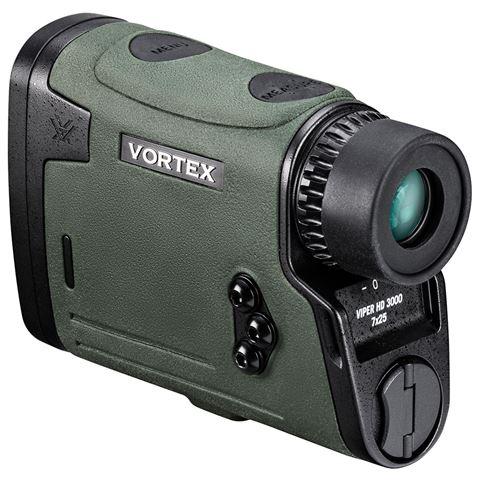
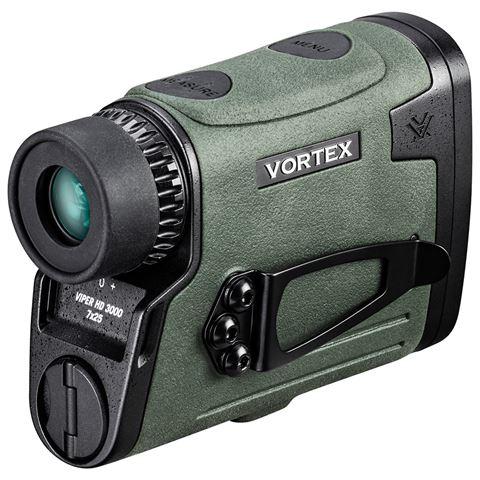
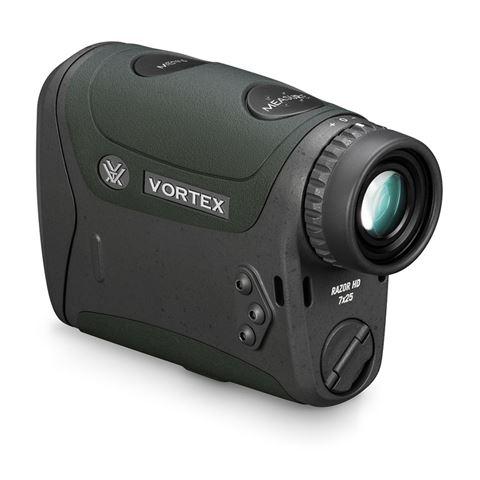
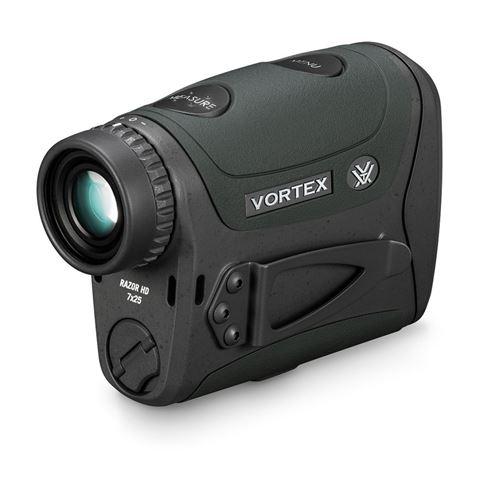
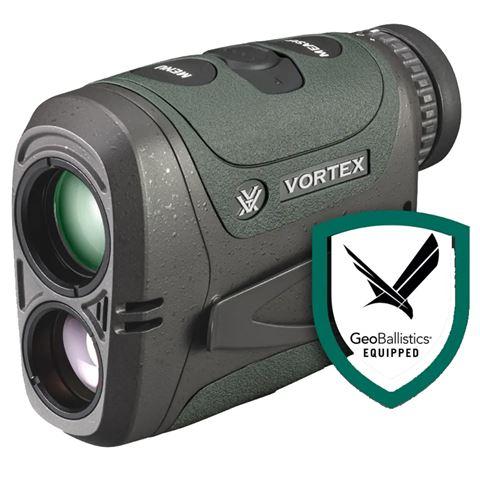
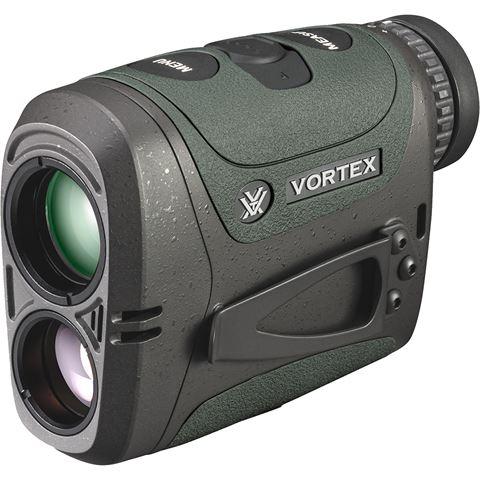
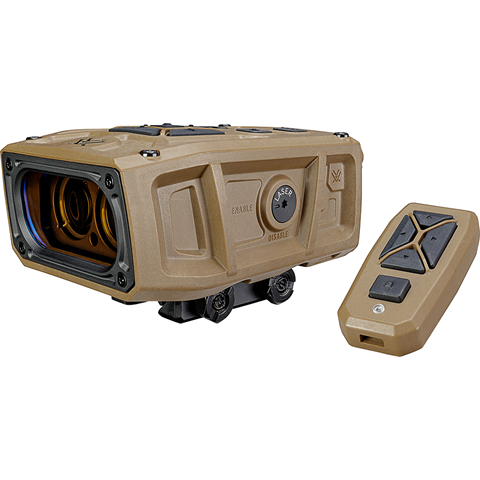
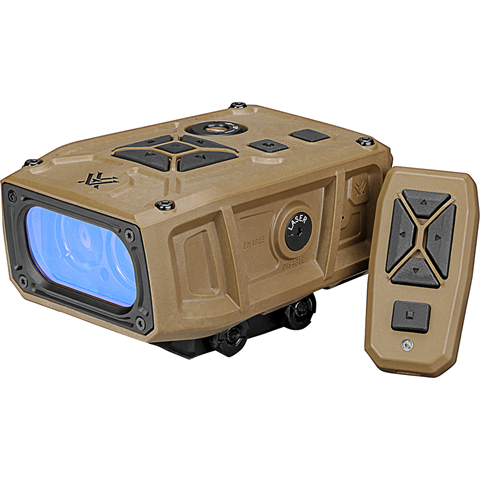
From Vortex we stock four models. The Viper HD 3000 is the entry point with 3000 metre range, solid for most applications up to 1000 metres. The Razor HD 4000 steps up with 4000 metre range and better optics. The Razor HD 4000 GB adds GeoBallistics integration for direct ballistic corrections. And the Impact 4000 is a rail mounted model that sits on your scope, 4000 metre range, built in ballistics, for the shooter who wants everything in one integrated system.
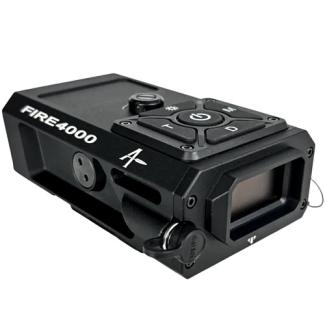
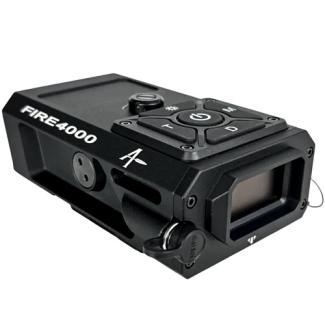
We also stock the Tango FIRE4000, a weapon mounted rangefinder with 4000 metre range. Compact, fast, mounted directly on your rail next to your scope.
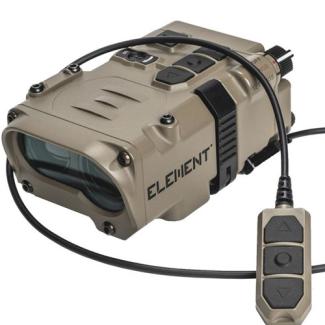
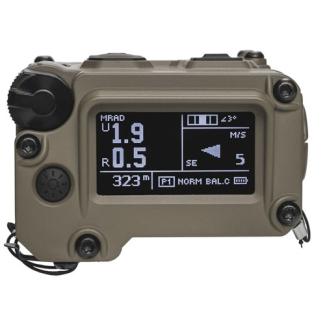
New in our range is the Element Optics Seeker. A weapon mounted rangefinder with 3000 metre range, built in barometer, hygrometer, inclinometer, thermometer and compass. The Seeker has a full ballistic computer on board that automatically factors in all that sensor data into your firing solution. Wind speed and direction are entered manually, with the option to input two values simultaneously for a high and low estimate. Four ballistic profiles, Bluetooth pairing with the Element Ballistics App, and it can be zeroed to your riflescope. At €1,139.95 you get a package that competes on functionality with models costing twice as much. Available from summer 2026.
Which rangefinder for which discipline
For F-Class and benchrest at fixed distances (300, 600, 1000 yards) a Viper HD 3000 is sufficient. You measure your target distances and reference points beforehand and that is it. For PRS where you need to quickly range multiple targets at varying distances, you want a weapon mounted model. The Impact 4000, FIRE4000 and Seeker are the options, each with built in ballistics so you do not have to break position. The Seeker is the most affordable of the three. For ELR beyond 1500 metres you need the range of an Impact 4000 or FIRE4000 (4000 metres vs 3000 for the Seeker).
Hunters benefit from angle compensation and compact dimensions. The Viper HD 3000 or Razor HD 4000 fits in a hunting jacket and gives you the horizontal distance you need for an ethical shot.
Maintenance
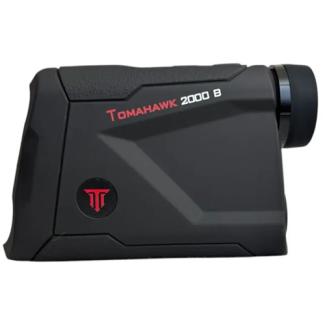
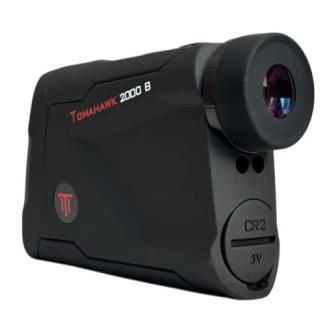
Vortex rangefinders last for years. Keep the lenses clean with a microfibre cloth, store the unit in its case, and replace the battery in time. Most models run on CR2 or CR123 batteries. Always check your battery level before a match or training day. A dead rangefinder at the range is no fun.
Not sure which model suits your discipline? Get in touch, we are happy to help.