
Determining Bullet Seating Depth: The Complete Guide for Precision Reloading
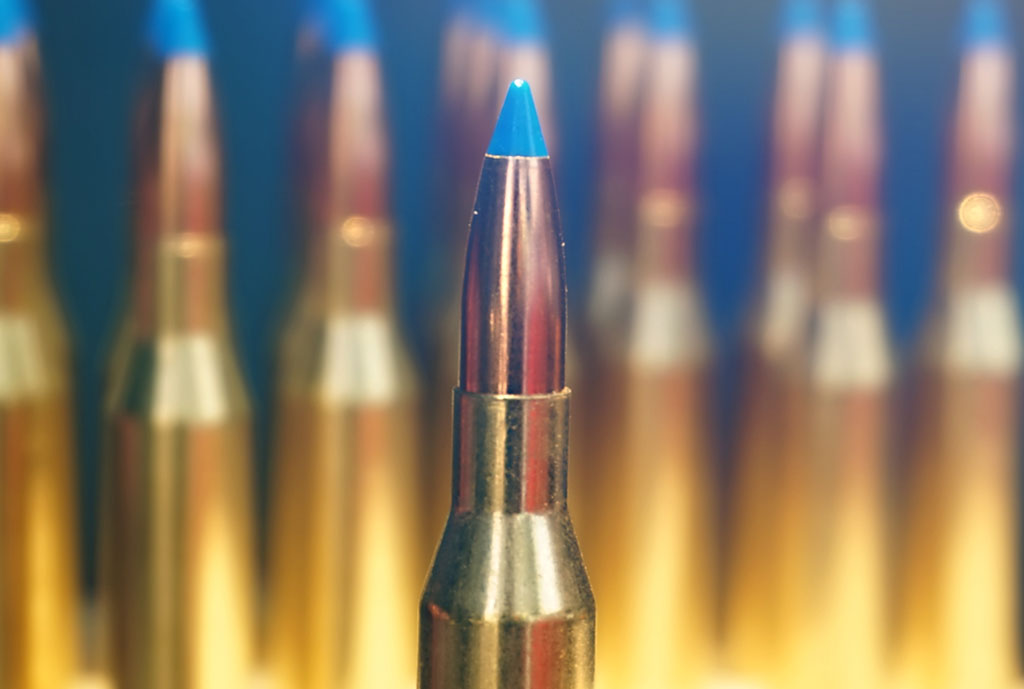
In precision reloading, bullet seating depth is one of the most underestimated factors affecting accuracy. A difference of just a few thousandths of an inch in the distance between bullet ogive and rifling lands can mean the difference between average groups and exceptional precision. This comprehensive guide explains what seating depth is, why it matters, and how to determine the optimal setting for your rifle using the right tools.
What is seating depth and why does it matter?
Bullet seating depth determines how deep the bullet sits in the case. This directly affects the Overall Length (OAL) of the cartridge and, more importantly, the distance the bullet must travel before engaging the lands and grooves of the barrel. This distance is called the "jump" or "free travel."
The relationship between seating depth and precision
When a bullet is fired, it first exits the case mouth and travels through the freebore before the ogive contacts the lands. This transition is crucial for bullet stability. A bullet that enters the rifling perfectly centered will have a more stable flight than one that enters at an angle or with excessive clearance.
Most precision rifles perform best with bullet jump between 0.010" and 0.020" from the lands. Some bullets, like Berger VLDs, may prefer slightly more or less jump. Finding this sweet spot requires accurate measurements and systematic testing.
Effect on chamber pressure and velocity
Seating depth affects not only precision but also pressure development in the chamber:
- Deeper seated bullets reduce internal case volume, resulting in higher pressure and potentially higher velocity
- Bullets jammed into the lands significantly increase resistance and peak pressure
- Bullets with more jump generally have lower initial pressure as they build momentum before engaging the lands
It's essential to always follow safe reloading practices and monitor pressure signs carefully when experimenting with seating depth.
COAL versus CBTO: which measurement counts?
Two measurements are used when determining seating depth:
COAL (Cartridge Overall Length)
This is the total length of the cartridge, measured from the base of the case to the tip of the bullet. While COAL is important for magazine length and SAAMI specifications, it's not a reliable measure for consistent seating depth. Bullet tips vary considerably, even within the same box. Variations of 0.010" to 0.025" are common, especially with soft points and polymer tips.
CBTO (Cartridge Base to Ogive)
This is the measurement from the base of the case to the point on the ogive where the bullet contacts the lands. This measurement is much more consistent and forms the foundation of precision reloading. It's the ogive that contacts the rifling, not the tip, so CBTO is the only measurement that truly matters for determining jump.
Essential measuring equipment
To determine the correct seating depth, you need specialized measuring equipment. Here are the essential tools:
OAL Gauge (Overall Length Gauge)
The Hornady Lock-N-Load OAL Gauge is the industry standard for determining maximum cartridge length where the bullet just touches the lands. This instrument works with a modified case made specifically for your caliber.
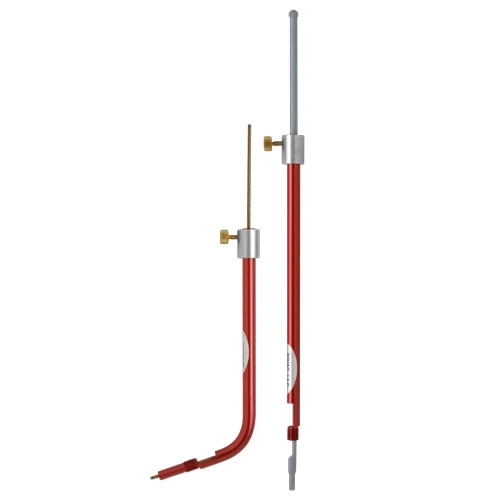
The system comes in two variants:
- C-1000 Straight Model for all bolt-action and single-shot firearms with direct chamber access. This model is most accurate and user-friendly.
- C-1550 Curved Model for semi-automatics, lever-actions, and pump-action rifles. This model fits through the ejection port.
Modified Cases
A Hornady Modified Case is a specially machined case that threads onto the OAL Gauge. These cases feature fine threading at the base and have a 0.002" oversized neck diameter so bullets can move freely. This ensures measurements accurate to within 0.001".
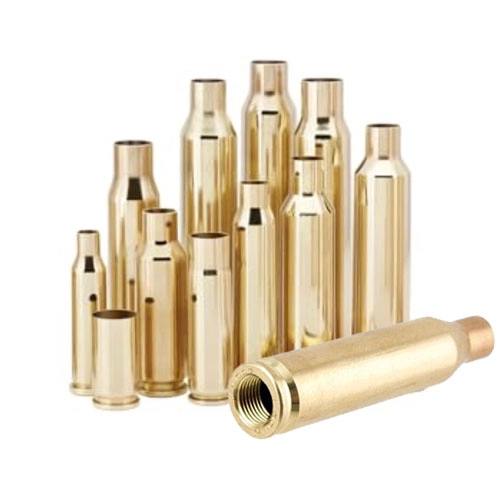
Custom Modified Cases at Hop.nl
We can also make custom modified cases for calibers that aren't standard available, including wildcat calibers. Contact us for options.
Bullet Comparator
A Derraco Headspace and Bullet Comparator Set or similar comparator is indispensable for measuring CBTO. It attaches to your caliper to measure from the ogive instead of the bullet tip.
The comparator uses interchangeable inserts for different calibers. The insert contacts the bullet at a consistent point near the ogive, providing much more reliable measurements than measuring to the tip.
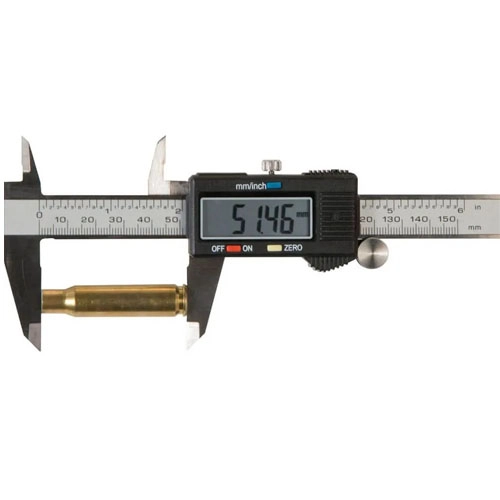
Digital Caliper
An accurate Digital Caliper is the foundation of all your measurements. Choose a model with at least 0.0005" (0.01 mm) resolution. The Frankford Arsenal digital caliper offers excellent value for precision reloading work.
Seating the bullet: precision seating dies
After measuring comes the actual seating of the bullet. For maximum precision and repeatability, your choice of seating die is crucial.
LE Wilson Micrometer Seating Die
The Micrometer Seating Die by LE Wilson represents the absolute pinnacle of bullet seating precision. This inline seating die ensures the bullet is seated perfectly in line with the case, resulting in minimal run-out and maximum concentricity.
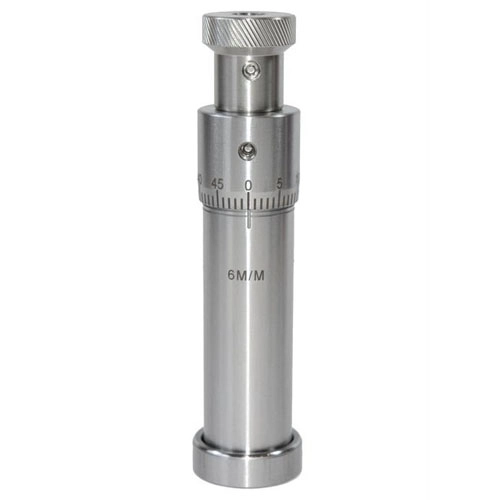
Features of the LE Wilson seating die:
- Inline seating where the bullet is seated exactly in line with the chamber, just like in your rifle
- Micrometer adjustment for precise settings in 0.001" increments
- No shellholder required because the case rests on the shoulder, ensuring consistent seating depth
- Caliber-specific design for optimal fit
K&M Arbor Press
LE Wilson seating dies are designed for use with an arbor press rather than a conventional reloading press. The K&M Precision Arbor Press is the ideal choice for this purpose.
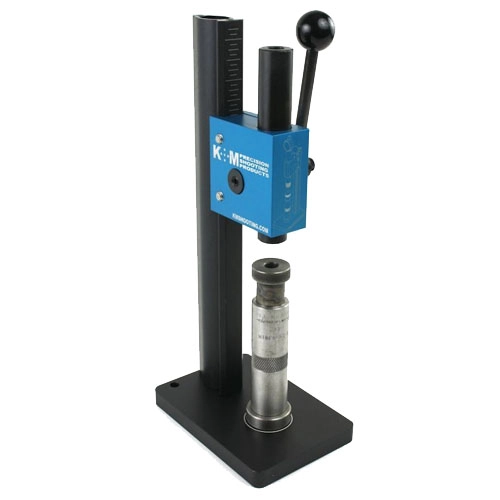
The combination of an LE Wilson die with a K&M arbor press gives you the feel of the bullet sliding into the case. You feel precisely when the bullet reaches the correct depth, which is impossible with a conventional press. This is the setup used by benchrest shooters and serious precision loaders worldwide.
Step-by-step guide: finding the lands
Follow these steps to determine the distance to the lands using the Hornady OAL Gauge:
Step 1: Preparation
Ensure the barrel and chamber are clean. Fouling or copper residue can affect the measurement.
Step 2: Prepare the modified case
Chamfer and deburr both the inside and outside of the modified case mouth. The bullet must slide freely.
Step 3: Verify fit
Chamber the modified case and close the bolt to verify you're using the correct case. The bolt should close smoothly without distorting the case. Never force the bolt closed.
Step 4: Check bullets
Check your bullets for uniformity. Variations of 0.010" or more in length will produce irregular OAL results. Sort if necessary.
Step 5: Assembly
Thread the modified case onto the OAL Gauge and slip a bullet into the case mouth.
Step 6: Measure
With the bolt removed, carefully slide the assembly into the chamber. Gently push the internal rod forward until you feel the bullet contact the lands. Tighten the brass thumbscrew to lock the position.
Step 7: Remove and measure
Carefully remove the assembly from the chamber. Use a wooden dowel or cleaning rod from the muzzle if needed. Now measure the CBTO with your caliper and comparator.
Step 8: Repeat for consistency
Take at least three measurements with the same bullet and record the values. Repeat with multiple bullets from the same box to determine variation.
From measurement to optimal seating depth
Now that you know the distance to the lands, you can determine the optimal seating depth:
Establishing a starting point
Most precision shooters start with a jump of 0.010" to 0.020" from the lands. This is a safe starting point that yields good results for most bullet/rifle combinations.
Systematic testing
Test seating depth in increments of 0.005". Load batches of 3-5 rounds per seating depth and shoot groups to compare. Many shooters find that:
- Tangent ogive bullets (like Sierra MatchKings) often perform well with more jump
- Secant ogive bullets (like Berger VLDs) often want to be seated closer to or even into the lands
- Hybrid ogive bullets (like Berger Hybrids) are relatively insensitive to small changes in jump
Hunting versus competition
For hunting loads, it's wise to stay at least 0.010" from the lands. A bullet seated into the lands can stick in the barrel when unloading, creating a dangerous situation. Additionally, the cartridge must reliably fit in the magazine.
For benchrest and precision competition, shooters are often willing to seat bullets closer to or even slightly into the lands, and to single-feed cartridges.
Tracking throat erosion
An often-overlooked benefit of regular measurement is tracking throat erosion. The lands wear with use, causing jump to increase. The rate of erosion varies significantly depending on caliber, powder type, and powder charge. Overbore calibers like the .243 Winchester or 6.5-284 Norma erode faster than calibers with a more favorable bore-to-case ratio such as the 6.5 Creedmoor or .308 Winchester.
By measuring regularly, you can "chase the lands" and adjust seating depth to maintain consistent performance over the barrel's life.
Common mistakes
Changing too many variables at once
Always adjust only one variable per test. Don't change powder charge and seating depth simultaneously.
Measuring with different bullets
Always use the same bullet for comparative measurements. Different bullets have different ogive shapes and thus give different CBTO values.
Ignoring magazine length
Ensure your cartridges fit in the magazine unless you deliberately choose single-feed loading.
Insufficient measurements
Always take multiple measurements and calculate the average. A single measurement can be misleading.
Specifications
- Hornady Lock-N-Load OAL Gauge: Straight (C-1000) or Curved (C-1550) model, accuracy to 0.001"
- Hornady Modified Cases: Caliber-specific, SAAMI-compliant, 0.002" oversized neck
- Derraco Comparator Set: Complete set with inserts for common calibers
- Digital Caliper: Minimum 0.0005" (0.01 mm) resolution, preferably 6" measuring range
- LE Wilson Micrometer Seating Die: Inline seating, micrometer adjustment per 0.001"
- K&M Arbor Press: Precision press for use with LE Wilson dies
- Applications: F-Class, PRS, Benchrest, long-range hunting, precision reloading
Further reading
Want to learn more about precision reloading and shooting sports? Check out our other articles on the Hop.nl Blog for tips, guides, and product reviews.
Looking for new reloading equipment? Browse our New Products for the latest additions to our range, or take advantage of our Special Offers for great prices on quality products.