

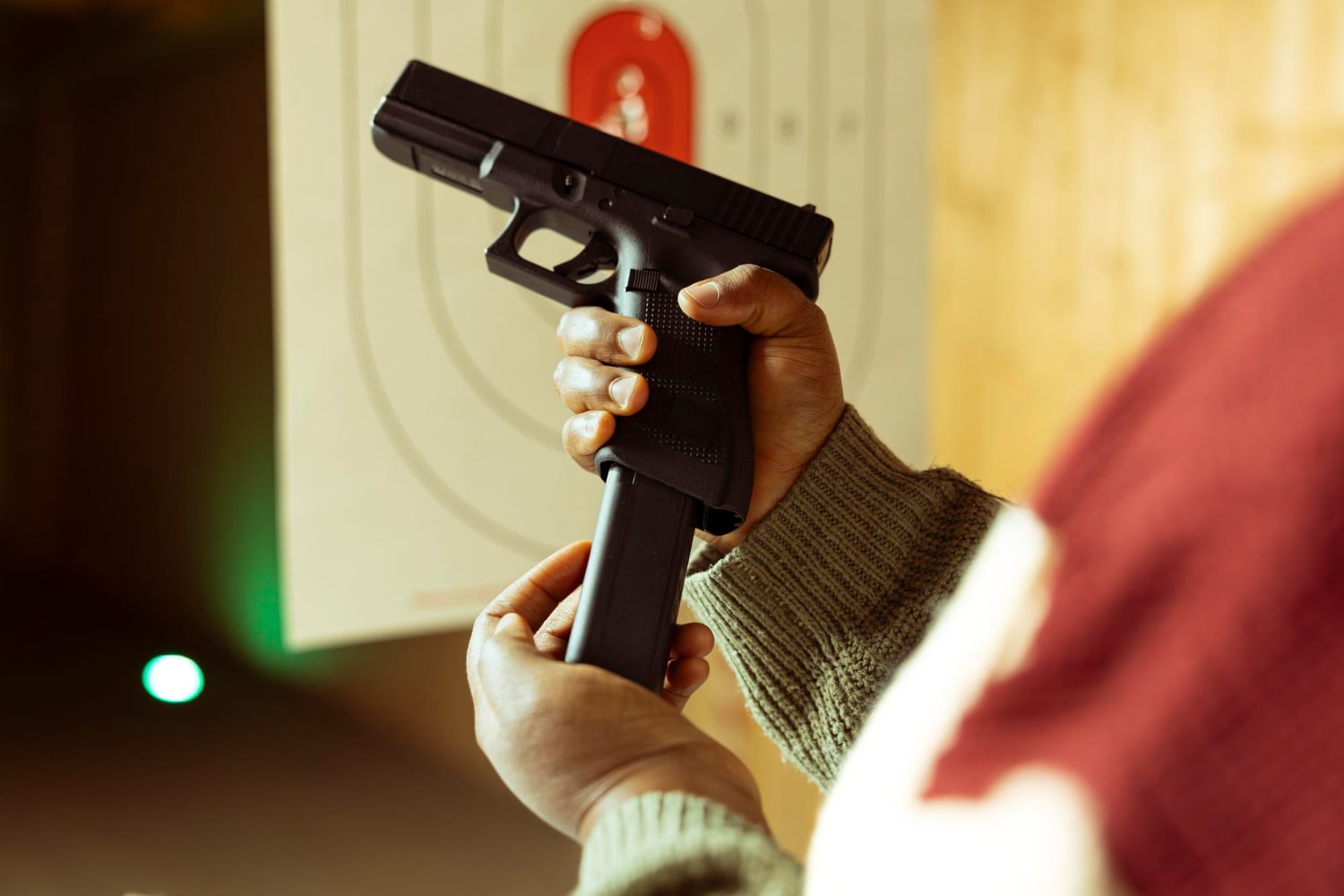
You're at the range, you've got your firearm, your ammunition, and you're ready to shoot that perfect group. You concentrate, squeeze the trigger... and the bullet lands just off from where you wanted it. Frustrating, right? Don't worry, you're definitely not alone. Every shooter, from beginner to seasoned professional, makes mistakes. The good news is that many of these mistakes can be identified and, with the right knowledge and training, corrected. Awareness of common mistakes is the first step toward improvement.
In this blog, we dive into some of the most common shooting mistakes that can ruin your precision. We look specifically at crucial aspects such as breathing and trigger control, but also at other pitfalls like flinching and incorrectly using your sights. More importantly, we give you practical tips and techniques to prevent these mistakes and take your shooting skills to the next level. Because ultimately, we all want the same thing: consistently hitting what we aim at, and enjoying it!
Before we dive into the details of breathing and trigger movement, it's important to have the basics right. A stable and consistent stance literally forms the foundation of every good shot. Whether you're standing, kneeling, or prone, make sure your body is stable and relaxed. Tension in your muscles leads to tremors and unpredictable movements.
A few quick tips for a good stance:
Feet shoulder-width apart: Provides a stable base.
Slightly bent knees: Helps absorb recoil and provides flexibility.
Relaxed shoulders: Tension in the shoulders transfers to your arms and hands.
Natural point of aim: Your body should point relaxed toward the target without needing to strain muscles to stay on target.
Besides your stance, your grip on the firearm is extremely important. It must be consistent with every shot. A grip that's too loose causes the firearm to move too much during the shot (and recoil), while a grip that's too tight causes tremors. Find a firm but relaxed grip that you can repeat with every shot. Experiment with what works best for you and be aware of the pressure your hands exert. For extra stability, especially with rifles, bipods or a good rifle rest can make a world of difference.
Mistake 1: Improper Breathing
Your breathing has a direct influence on the stability of your firearm. During inhalation and exhalation, your chest moves and with it your shoulders and arms. If you shoot while actively breathing, your point of aim will inevitably move. A common mistake is trying to shoot exactly when the sight passes the target during the breathing cycle, or holding your breath too long which creates tension.
The solution lies in utilizing your natural respiratory pause. This is the brief moment of stillness that occurs between exhaling and the next inhalation. The technique is simple but requires practice:
Breathe in normally.
Exhale about half to three-quarters calmly and relaxed.
Pause your breathing in this relaxed state. This is your natural respiratory pause. This pause lasts only a few seconds.
During this short, relaxed pause, squeeze the trigger calmly and controlled.
If the shot doesn't "break" within those few seconds, don't force it. Continue breathing calmly and start over.
It's important not to force your breath or hold it too long. This causes oxygen deprivation and muscle tension, leading to tremors. Practice this technique, possibly with dry firing, until it becomes automatic.
Mistake 2: Poor Trigger Control
This is perhaps the most common cause of inaccurate shots. Poor trigger control means you're not pulling the trigger correctly. Instead of a controlled movement, you "yank" or "jerk" the trigger. This often happens unconsciously, just before the shot goes off. The result? The firearm moves at the critical moment, and your shot deviates from your point of aim.
Mistakes that fall under this include:
Pulling the trigger too fast or abruptly.
Moving the trigger sideways instead of straight back.
Changing or tensing your grip while pulling the trigger.
Anticipating the shot and thereby disrupting the trigger movement.
Good trigger control comes down to one thing: moving the trigger straight back with constant, increasing pressure, without disturbing the alignment of your sights on the target. The shot should essentially be a surprise.
Tips for better trigger control:
Finger placement: Use the first pad (the "fleshy" part) of your index finger. Place the center of this pad on the trigger. Too much or too little finger can lead to sideways pressure.
Constant pressure: Increase pressure on the trigger evenly and straight back. Don't stop halfway and don't speed up at the end.
Focus on the sights: Keep your focus on the alignment of your sights on the target, not on the trigger itself.
Surprise: The moment the shot goes off should be unexpected. If you know exactly when it's going to happen, you're probably anticipating and forcing the shot.
Follow-through: After the shot has fired, hold the trigger in the rear position for a moment before letting it return in a controlled manner. Don't release the trigger abruptly ('slapping the trigger'). This helps minimize the movement of the firearm after the shot.
Dry firing (practicing with an unloaded firearm, ALWAYS verify the firearm is unloaded!) is an excellent way to practice your trigger control without using ammunition. You can also use a digital trigger pull gauge to learn what it feels like to apply consistent pressure.
Mistake 3: Flinching (Anticipating the Shot)
Flinching is the involuntary contraction of muscles or blinking of your eyes just before the shot goes off. Your body anticipates the bang and/or recoil and tries to brace itself. This disrupts your stance, grip, and point of aim at the very last, critical moment.
Unlearning flinching requires conscious effort and training:
Focus on the basics: Concentrate extra hard on your breathing (natural pause) and trigger control (constant pressure, surprise).
Dry firing: Because there's no bang or recoil, you can focus entirely on correct execution without the tendency to flinch. Pay close attention to whether your sights move when the hammer or firing pin falls.
Ball and Dummy Drill: Ask a shooting buddy to load your magazine or cylinder with a mix of live rounds and dummy rounds (practice rounds without powder or primer). Because you don't know when there will be a "click" (dummy) or "bang" (live round), any flinch becomes painfully obvious on a "click."
Good hearing protection: Comfortable and effective hearing protection can help reduce anticipation of the bang. If you're less bothered by the noise, you're less likely to flinch.
Start with a lighter caliber: If you struggle with anticipating recoil, practice (temporarily) with a firearm with less recoil to learn the correct techniques without the "fear" of the kick.
Mistake 4: Improper Sight Alignment
Even with perfect stance, breathing, and trigger control, you'll miss the target if your sights aren't correctly aligned or if your focus is wrong. Sight alignment refers to the correct alignment of your front and rear sights (or the reticle of your scope). Sight picture is how these aligned sights relate to the target.
Common mistakes include:
Incorrect alignment of front and rear sights (e.g., front sight too high/low or left/right in the notch).
Focusing on the target instead of the front sight (with iron sights).
Inconsistent cheek weld (the way your cheek contacts the stock), leading to varying eye position behind the scope.
Parallax error with riflescopes (the reticle appears to shift relative to the target when you move your eye).
Correct aiming requires discipline and understanding of your sights:
Iron sights: Align the top of the front sight level with the top of the rear sight (the notch). Make sure the front sight is exactly in the center of the notch, with equal light on both sides. Focus your eye sharply on the front sight; the rear sight and target will be slightly blurry.
Riflescopes: Ensure a consistent cheek weld so your eye is always in the same position behind the scope. Focus sharply on the reticle. Set the parallax correctly for the shooting distance to eliminate parallax error (usually via an adjustment ring on the objective or a separate side turret).
Consistency is key: Practice achieving exactly the same sight alignment and sight picture with every shot.
If you find your sights aren't meeting your needs or you want to expand your options, check out our range of riflescopes and red dots for options that better suit your requirements.
Practice Makes Perfect: Training Tips
Recognizing mistakes is one thing, correcting them is another story. That requires focused training and patience. Here are some tips:
Dry firing: We can't emphasize it enough. Regular dry firing is one of the best ways to practice your trigger control and sight alignment without the "noise" of recoil and bang.
Use the right targets: Choose targets that help you analyze specific mistakes. Precision cards are good for trigger control and grouping. Smaller steel targets challenge you to be fast and accurate.
Focus on one thing at a time: Don't try to improve everything at once. During a training session, focus on one specific aspect, such as breathing or follow-through.
Film yourself (if possible): Watching yourself shoot can be incredibly enlightening. You often see immediately where things go wrong, such as a flinch or movement during the trigger pull.
Quality over quantity: Better ten concentrated, well-executed shots than fifty sloppy ones. Focus on the correct execution of each step.
Consider instruction: A good instructor can quickly identify your mistakes and give you targeted feedback.
In Summary: Be Aware, Train Purposefully
Making mistakes is a normal part of any learning process, and shooting sports are no exception. Whether it's your breathing, the way you pull the trigger, anticipation of the shot, or the alignment of your sights, there are various factors that can affect your precision. The most important thing is that you become aware of these potential pitfalls and train purposefully to prevent them.
Be patient with yourself. Improvement takes time and consistent practice. Use techniques like dry firing, the ball and dummy drill, and focus on the basic principles of stance, grip, breathing, and trigger control. Analyze your results on suitable targets and don't be afraid to seek help or instruction.
With the right knowledge, training, and tools, you can overcome common shooting mistakes and significantly improve your performance. Check out our range of shooting sports articles, from targets to sights and training aids, and take the step toward more accurate and enjoyable shooting today.